

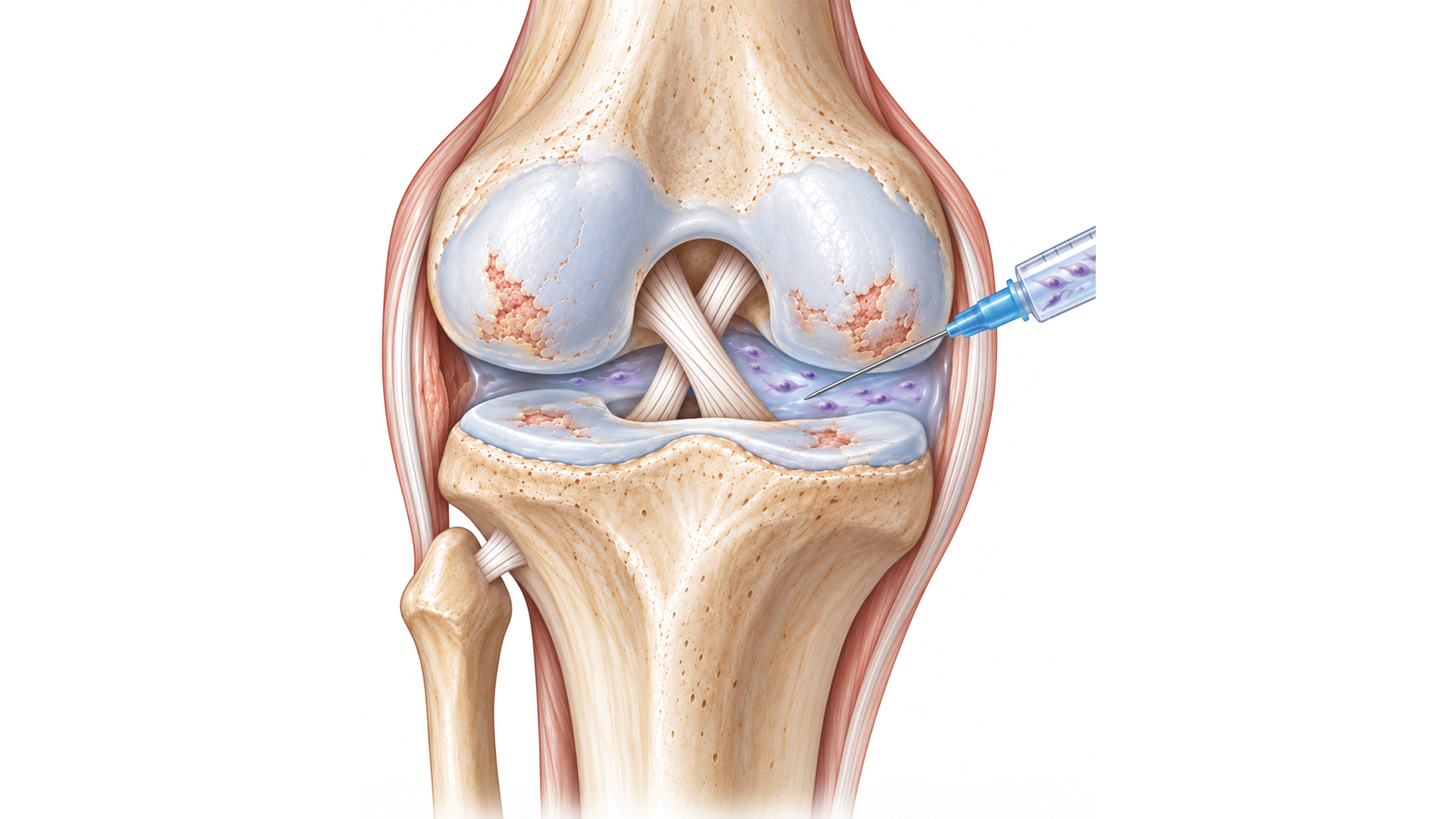
For many people, the first signs of knee osteoarthritis are easy to dismiss: discomfort on the stairs, stiffness after sitting or a growing reluctance to walk long distances. Over time, however, pain and restricted movement can affect work, exercise and the simple routines of daily life.
Cartilage degeneration is a widespread and critical issue. It can cause persistent pain, stiffness and reduced mobility, affecting people’s ability to remain active and independent. Existing treatments, including medication, physical therapy, injections and surgery, can help manage symptoms. Researchers are also investigating approaches that may address the biological processes underlying joint degeneration.
As the Asian Games turn the world’s attention to athletic performance, researchers at The Chinese University of Hong Kong (CUHK) are pursuing a different but closely related goal: helping people maintain mobility throughout life.
The CUHK InnoHK Centre for Neuromusculoskeletal Restorative Medicine (CNRM) is exploring whether cell-based therapy can offer a new approach to knee osteoarthritis. The Centre has signed a Memorandum of Understanding with a Sweden-based leading producer of high-quality mesenchymal stromal cells (MSCs) to advance MSC therapy for the condition. The collaboration will strengthen CNRM’s translational pathway from laboratory research to clinical treatment.
Beyond the Asian Games: science for lifelong mobility
The connection with sport is meaningful, but not direct. CUHK conducts separate research with the Hong Kong Sports Institute to support athletic performance and health in the long run. This work forms part of ongoing research programmes rather than an initiative developed exclusively for the Asian Games. CNRM’s MSC programme is focused primarily on translating cell therapy for age-related degenerative osteoarthritis, particularly among older adults.
Professor Patrick Yung Shu-hang, Director of CNRM, Chairman of the Department of Orthopaedics and Traumatology and S.H. Ho Professor of Orthopaedics and Sports Medicine at CUHK, emphasises that the therapy remains at the translation stage. The challenge is not simply to demonstrate that an approach shows promise in the laboratory, but to develop a treatment that is safe, reproducible, practical and capable of being delivered at a realistic cost.
From discovery to delivery: bringing cell therapy from lab to clinic
Mesenchymal stromal cells are being studied for their potential to regulate inflammation and support tissue repair. In the context of knee osteoarthritis, MSC therapy may eventually help relieve pain and improve joint function. The treatment remains under development, however, and its safety and effectiveness must be established through carefully designed clinical research.
The road from an experimental therapy to a treatment available to patients is long. It requires evidence from laboratory studies, clinical trials, regulatory oversight and a manufacturing process capable of producing a consistent product at the required quality.
Early work in cell therapy often relied on an autologous approach, using cells taken from the patient’s own body. In this process, tissue may be collected, processed and cultured before the cells are returned to the patient weeks later. Although this approach has helped researchers establish proof of concept, it involves an invasive procedure, a lengthy waiting period and substantial cost.
CNRM is now exploring an allogeneic approach, using cells from a donor. If successfully developed and validated, this could allow cells to be produced in advance and made available when needed. Patients would not need to undergo an initial cell-harvesting procedure while the production process could become more efficient and scalable.
For Professor Yung, this is a crucial step towards making cell therapy more viable. A treatment costing hundreds of thousands of dollars per procedure would be difficult to provide on a wide scale, however promising the underlying science might be. The objective is therefore to improve production speed, yield and cost-efficiency without compromising quality.
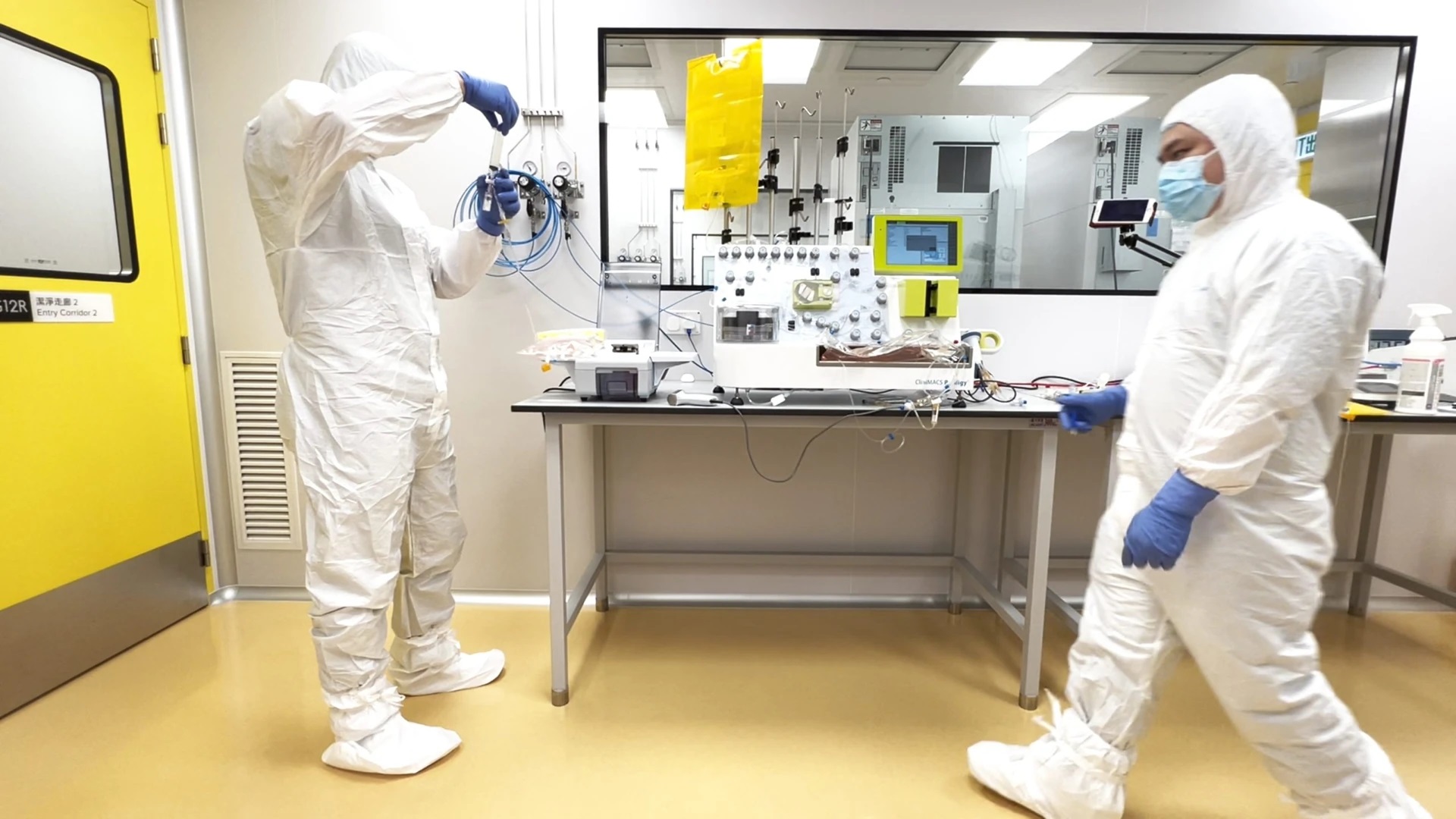
This is where the partnership with the Swedish company becomes important, which produces high-quality, GMP-certified MSCs drawing on more than 25 years of research associated with Karolinska Institutet. By combining its expertise in cell manufacturing with CUHK’s research and clinical capabilities, the collaboration aims to strengthen the infrastructure required for translational development.
Good Manufacturing Practice, or GMP, is more than a technical standard. It provides a framework for ensuring that a biological product is manufactured consistently and under controlled conditions. For advanced therapies, where the characteristics of cells can influence safety and efficacy, manufacturing quality is fundamental.
“Manufacturing is as important as the science itself,” Professor Yung explains. Without a dependable production process, a therapy cannot move confidently from the laboratory into clinical evaluation, nor can it eventually reach the patients who may benefit from it.

Building translational capacity in Hong Kong and the Greater Bay Area
This international collaboration contributes to a longer-term vision of strengthening Hong Kong’s capacity for advanced biomedical research and clinical translation.
Through CNRM, CUHK is developing plans for a spin-off company and a GMP-standard cell manufacturing facility in Hong Kong. The proposed facility is intended to support translational work in orthopaedics, including applications involving cartilage, muscle and tendon. Some technologies used to improve production efficiency will draw on the Swedish collaboration, while production is planned to take place locally.
If successfully established, the facility could represent a local first: according to Professor Yung, no other facility in Hong Kong has yet reached commercial application in this area. The significance would extend beyond the establishment of a new laboratory. It would provide infrastructure for researchers to develop clinical-grade cell products in Hong Kong and support closer collaboration between universities and industry.
The plan is to establish laboratories within the Northern Metropolis and the Hetao Zone to carry out this work, with a long-term vision of contributing to, and benefiting from, the wider Greater Bay Area (GBA). The location could eventually support regional biomedical development, although cross-border movement of biological materials, data and products will require appropriate systems and policies.
The process will not be immediate, and important scientific and regulatory questions remain. MSC therapy must continue to be evaluated through clinical trials, while manufacturing, data management and cross-border collaboration require careful coordination. CNRM’s approach is therefore measured: advance the science, build the necessary systems and test each stage rigorously.
This patience is particularly important in regenerative medicine. The field has generated considerable excitement, but a promising concept is not the same as an established treatment. The real test is whether a therapy can demonstrate safety, effectiveness and reproducibility, and whether it can be delivered to patients in a form that healthcare systems can sustain.
The Asian Games offer a timely reminder of the importance of musculoskeletal health, but the significance of CNRM’s work extends far beyond elite competition. Athletes depend on strong joints and effective rehabilitation to perform at their best. Older adults need mobility to remain independent and engaged in everyday life. Both groups point to the same broad scientific goal: preserving movement and quality of life.
Universities often work upstream, conducting highly precise and resource-intensive research in laboratories or with elite athletes before asking how findings can be adapted for broader use. The challenge is to transform specialised knowledge into solutions that are practical, accessible and affordable.

For CNRM, the journey from laboratory discovery to clinical application is therefore not simply a matter of scientific ambition. It is a commitment to patients. By linking CUHK’s research strength with international manufacturing expertise, the collaboration with the spin-off of Karolinska Institutet takes a measured but significant step towards making regenerative medicine more clinically viable. As a leading research university, CUHK continues to invest in projects that connect scientific excellence with social impact. The new international collaboration is one more step in that direction, bringing CUHK closer to its goal of transforming laboratory breakthroughs into therapies with real-world benefits.
The road ahead remains demanding. Yet each stage, from rigorous research and quality manufacturing to clinical evaluation, brings CUHK closer to a future in which more people can maintain mobility, independence and quality of life for longer.