

A tiny bead from the Kazakh Altai is helping CUHK researchers shed new light on how people, materials and ideas moved across Eurasia nearly two millennia ago. Excavated in the freezing mountains of eastern Kazakhstan and dated to the third to fourth century CE, the gold-in-glass bead has yielded microscopic chemical clues that point to a Mediterranean glassmaking tradition, offering a striking example of how archaeological science can reveal the hidden histories of long-distance exchange. Its journey—from the ancient Mediterranean to the Kazakh steppe, and ultimately under a microscope in sub-tropical Hong Kong—stands as a striking example of how modern, cross-border academic networks can unlock the hidden histories of early global exchange.
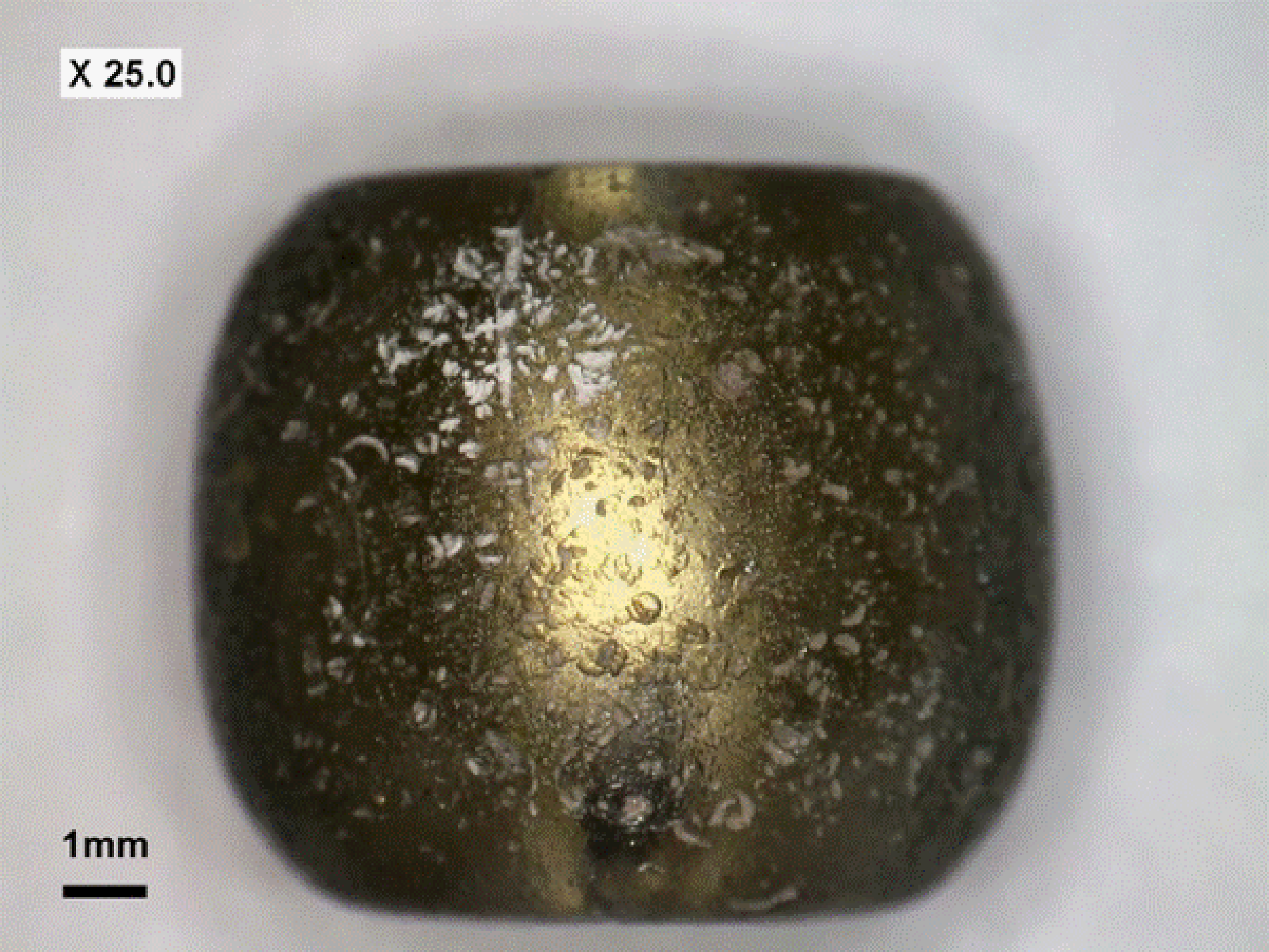
The study is part of a new collaboration between CUHK and three leading archaeological institutions in Uzbekistan and Kazakhstan, anchored by memoranda of understanding and research cooperation agreements. This strengthens long-term partnerships that expand research on the Silk Road beyond modern political borders. For Professor Lam Weng-cheong, Associate Professor in CUHK’s Department of Anthropology and Department of History, the initiative is as much about rethinking how the past is studied as it is about uncovering new artefacts. “Central Asia offers an opportunity to examine similar processes from a different perspective,” Professor Lam says. “The collaboration allows us to compare evidence from different parts of Eurasia rather than treating discoveries in China and Central Asia separately.”
Rethinking the Silk Road
That comparative lens matters. The Silk Road was never confined by the borders that define today’s maps. Across the Eurasian landmass, communities came into contact with unfamiliar goods, skills and technologies, adapting them to local needs and circumstances. Glass beads, bronze mirrors, cast-iron implements and lacquerware all travelled in different forms across wide distances, carrying with them evidence of exchange, imitation and transformation.
For Professor Lam, the Silk Road should be understood not as a single route between China and the Mediterranean, but as an expansive web of interactions linking multiple communities across Eurasia. “The familiar image of the Silk Road as a route for silk, spices, and other luxury goods is too narrow. Central Asia was not merely a corridor,” he says in essence through his research approach, “[but] a region where communities from different parts of Eurasia encountered one another and adapted unfamiliar materials and methods to their own needs.” He notes that by analysing the material culture of these communities, researchers can build a more nuanced picture of how long-distance exchange operated and how local traditions persisted within early global networks.
Science beyond appearance
The bead from the Kazakh Altai is a case in point. Although small enough to fit in the palm of a hand, it contains evidence of far-reaching movement of resources and production technology connection. CUHK researchers used SEM-EDS to examine the chemical composition of the glass and gold decoration, while micro-CT allowed them to study the bead’s internal structure without damaging it. By combining these methods, the team was able to reconstruct aspects of the manufacturing process that cannot be identified through visual observation alone.
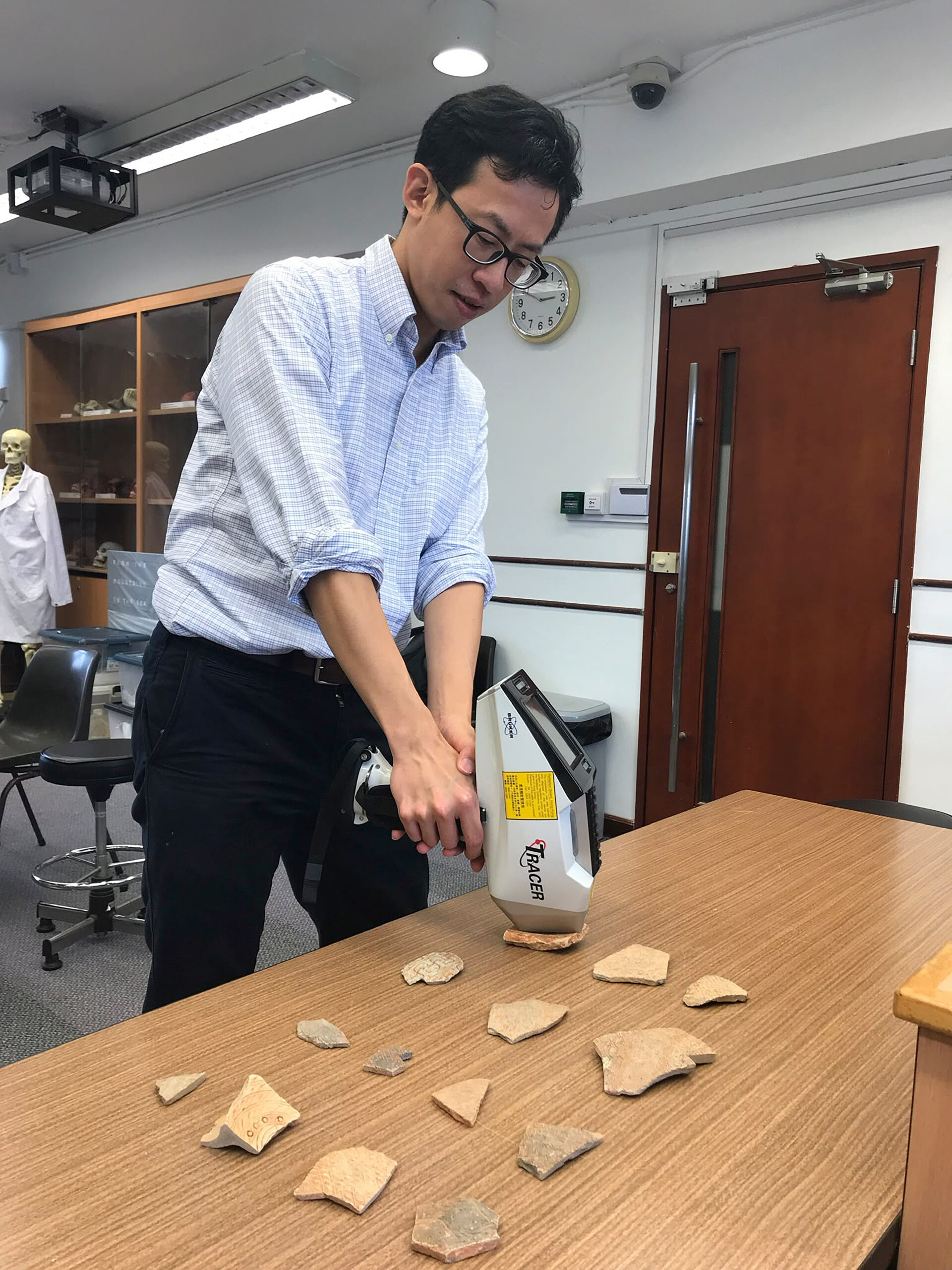
Preliminary results suggest that the bead’s composition is consistent with the natron glassmaking tradition associated with the Mediterranean and West Asia. That finding does not by itself prove where the finished object was made or how it reached the Kazakh Altai. It does, however, link the artefact to a technological tradition that travelled far beyond its point of origin. In archaeology, such distinctions matter. Scientific analysis can show not only that an object is foreign, but also how it was made and what that tells us about wider networks of circulation. [1]

Building equitable partnerships
The Central Asian collaboration also has an important human dimension. Professor Lam emphasises that international research is most meaningful when it is built on mutual respect and sustained exchange. “I have learned a great deal from my colleagues in Central Asia,” he says. “Collaboration is a process in which both sides contribute and learn from each other.”
The memoranda of understanding signed with partner institutions in Uzbekistan and Kazakhstan provide a formal basis for this work, helping CUHK build long-term and equitable research relationships in the region. Such partnerships are especially valuable in archaeology, where local expertise is essential to understanding site contexts, cultural traditions and field conditions. Scientific analysis can offer new evidence, but it must be interpreted alongside the knowledge of scholars who know the archaeological landscape first-hand.
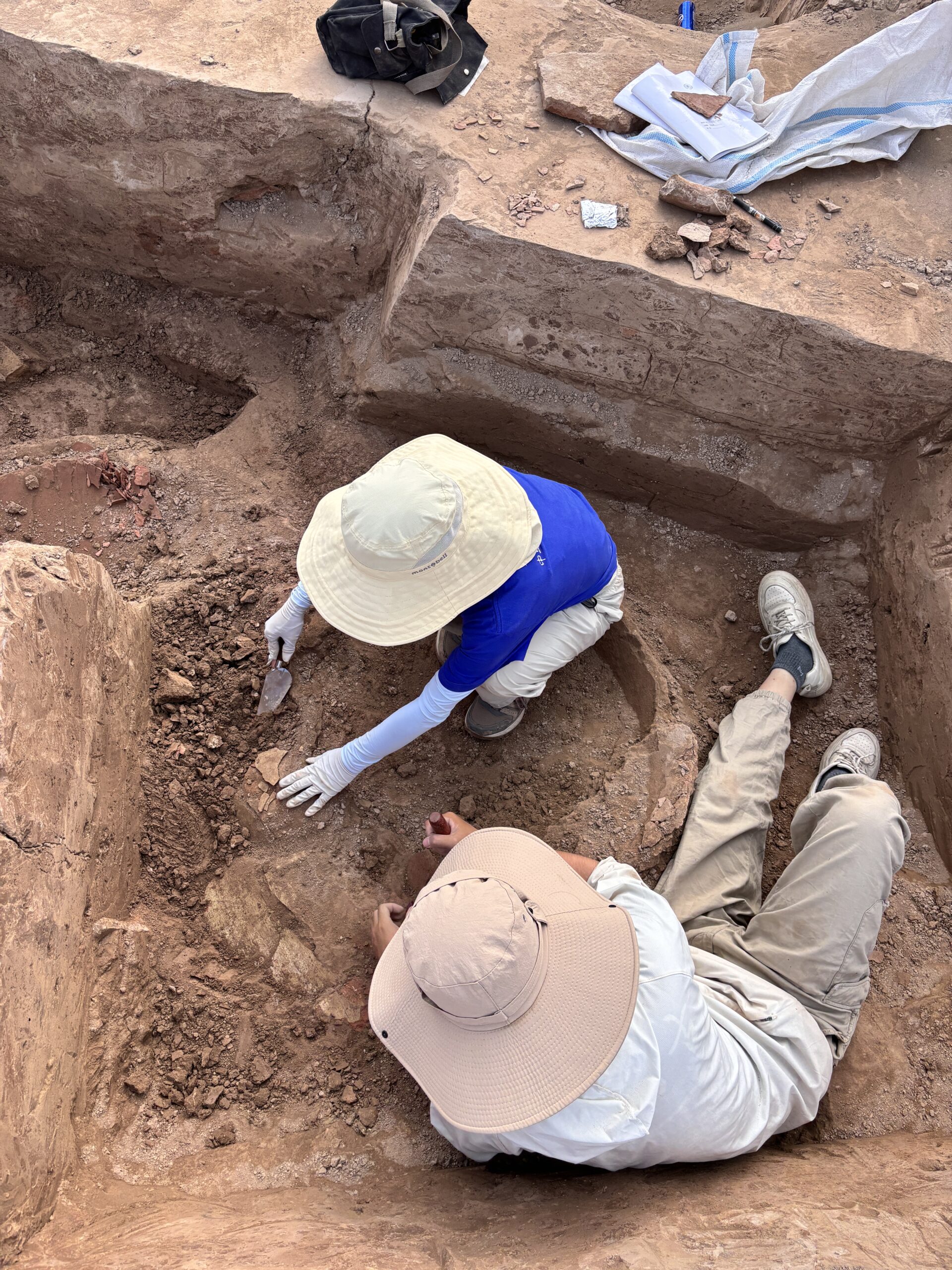
Training future scholars
The initiative also reflects CUHK’s commitment to nurturing the next generation of researchers. Professor Lam sees postgraduate students not simply as trainees, but as emerging scholars who should be encouraged to participate fully in international academic life. “Their training should extend beyond the dissertation and enable them to participate more fully in the wider academic community,” he says.
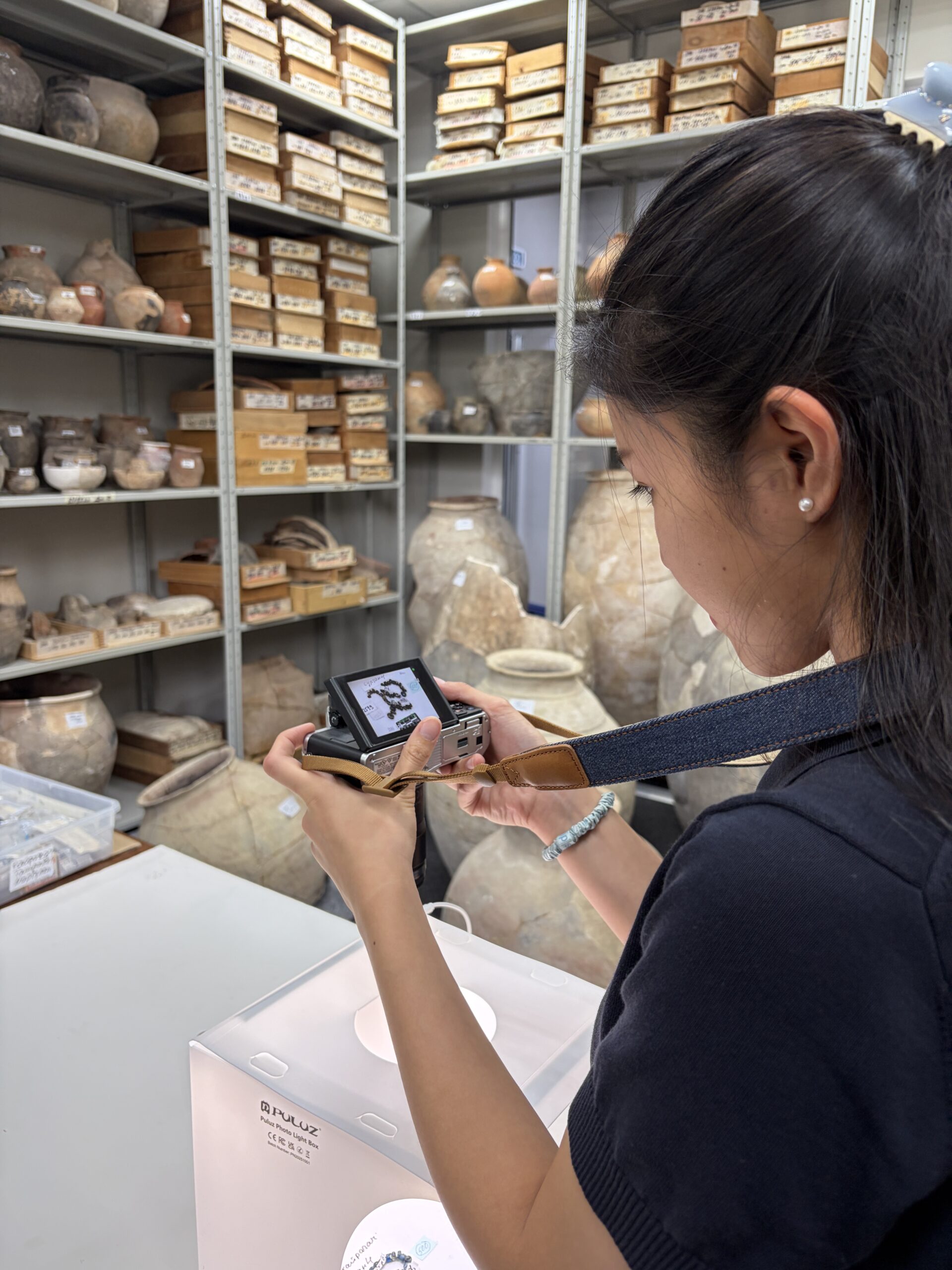
For Agnes Sung Pui-yee, a PhD candidate in Anthropology at CUHK, the collaboration offers precisely that kind of experience. Working in unfamiliar settings and alongside researchers from diverse archaeological traditions, she must respond to the practical and intellectual demands of fieldwork in ways that cannot be reproduced in the classroom. This immersive field experience strengthens her ability to conduct research across institutional and cultural boundaries while fostering professional relationships that lay the groundwork for future collaborations. This demonstrates how international partnerships advance the broader archaeological community by nurturing the next generation of scholars.

A shared human history
That broader educational value is one reason the project matters beyond a single artefact or excavation season. By linking research, training and partnership, the cross-border collaboration creates a model of international scholarship that is both rigorous and sustainable. It also reflects the wider spirit of the Silk Road itself: a region shaped not by isolation, but by interaction.
In that sense, the bead from the Kazakh Altai is more than an archaeological find. It is a reminder that movement across continents has long shaped human history, and that the questions we ask of the past can be enriched when scholars from different regions work together to answer them. At CUHK, this partnership with Central Asia is opening a new chapter in Silk Road research, one that combines scientific precision, cross-cultural collaboration and a shared commitment to understanding the ancient connections that continue to resonate today.
[1] Sung, A.P., Aitkali, A., Lam, W. et al. Manufacturing technology of ancient gold-in-glass beads from the Kazakh Altai and implications for Eurasian exchange. npj Herit. Sci., 2026.