





Two new AI colleagues are about to join the workforce: the M1 quadruped robot and the VLM-based dual-arm embodied AI system. Both promise to be useful in logistics, retail and industrial automation. Smarter than your average robot, they’re able to learn as they go, find their way around fiendishly complicated environments, carry heavy, awkwardly shaped loads, or understand instructions, break down tasks, and perform diverse operations. Their arrival signals a new era in industrial automation.

Playing a major role in enhancing the quality of human life, healthcare technologies, artificial intelligence and robotics technologies are the international global trends in the development of innovation and technology. CUHK has established six InnoHK Centres covering health, biomedicine, robotics and artificial intelligence in partnership with prestigious global universities.
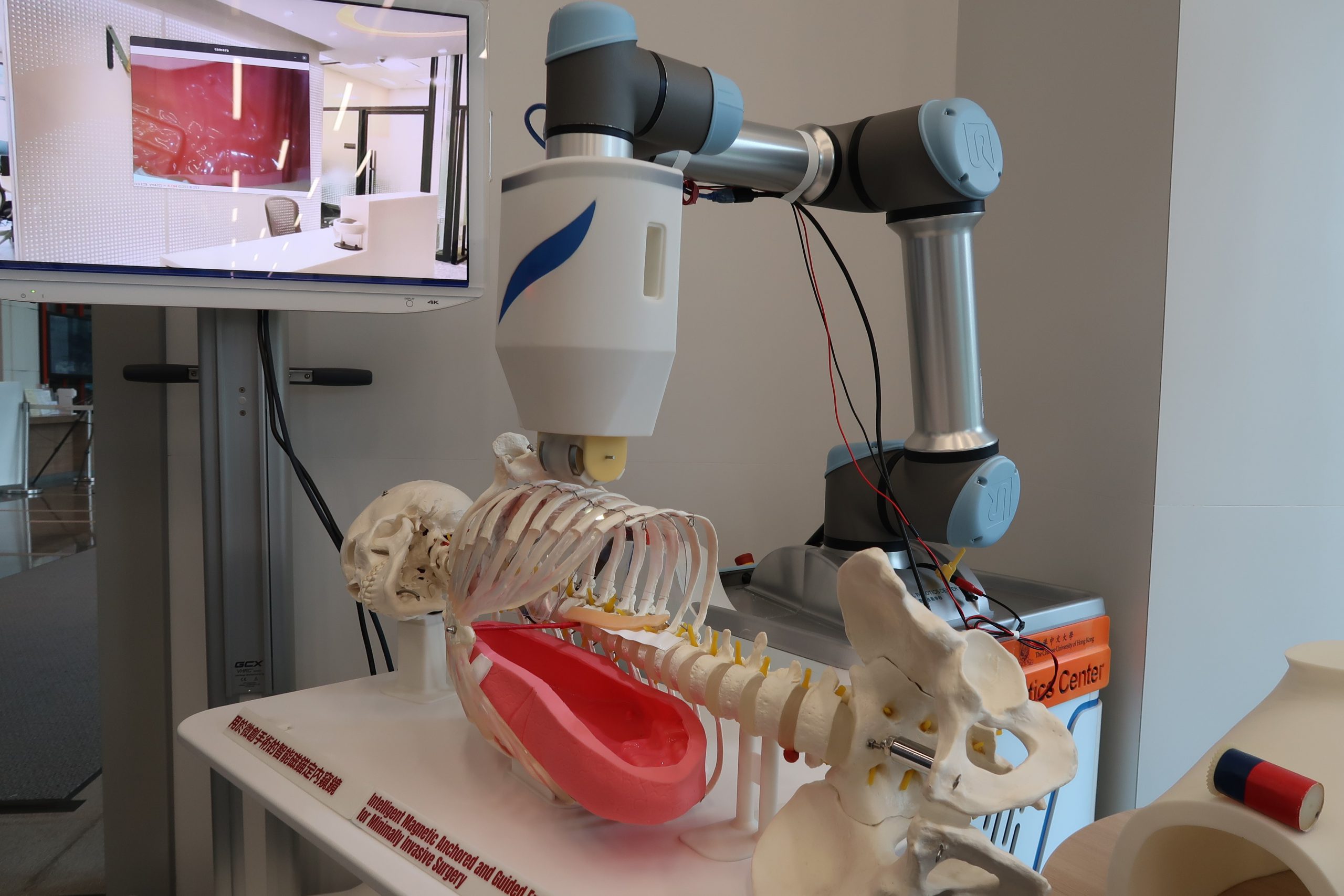
Magnets, play an important role in daily life, sometimes an invisible one, from refrigerator doors, credit cards, computers to high-speed maglev trains and more. A CUHK Surgery team’s invention of an intelligently guided magnetic endoscope brings an exciting new advance in minimally invasive thoracic surgery. No collisions between scope and scalpel, smooth video coverage of the cavity and no clean-up interruptions.

Driving research, innovation and entrepreneurship initiatives, CUHK recently hosted two major highlighted events, CUHK Innovation Day and CUHK Entrepreneur Day, to provide its communities an exchange platform to showcase innovation and entrepreneurial achievements to industries and the public, as well as translate innovative research into practice.
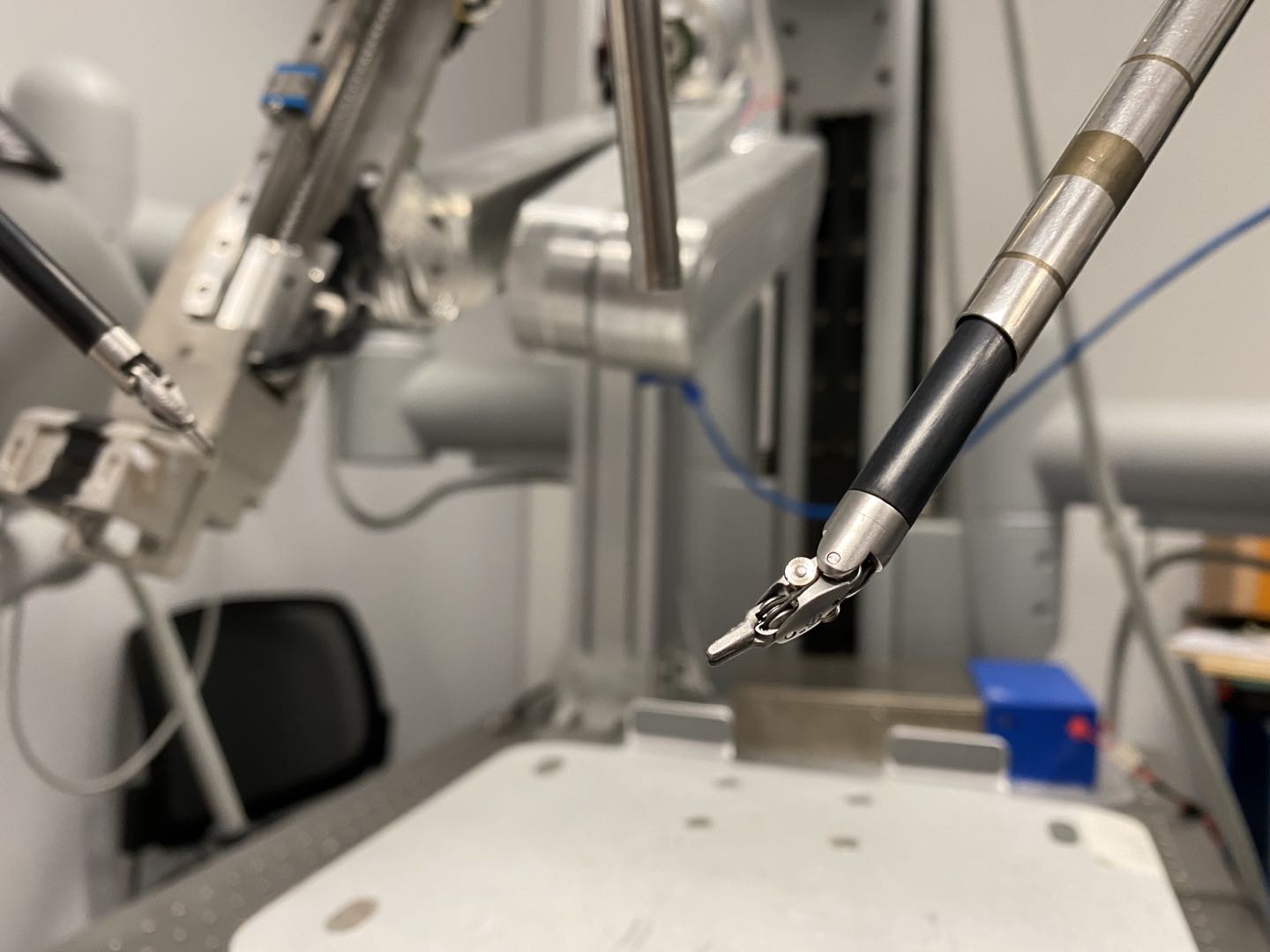
Surgical robots are commonly used in minimally invasive surgery and their accuracy holds the key to a successful operation. CUHK researchers have developed a world-first AI system with a novel deep learning method to optimise the gesture recognition of robots. The intelligent cognitive assistance not only allows robots to operate with greater precision for a safer surgery, but also wins patients’ trust in robotic surgery.
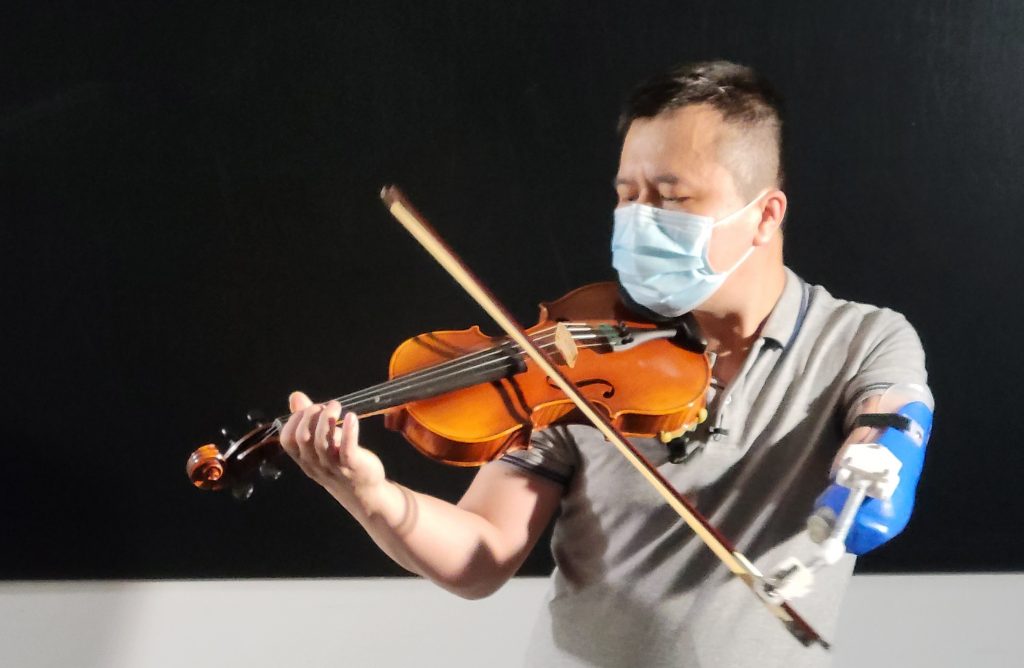
It is a tough task for an able bodied person to learn the violin, let alone someone without an arm. A multi-functional prosthetic with convertible adaptor developed by CUHK researchers gave hope to Roy who had lost his left arm and took him onto the stage in a concert given by a thousand-player orchestra, where he demonstrated his dream playing wonderful pieces of music.

A sci-fi adventure film from the 1960s, Fantastic Voyage, features a group of doctors shrinking into microscopic size and venturing into a patient’s brain to repair damages. A CUHK research team has recently brought this surreal fantasy to life by developing biohybrid soft microrobots, which navigates in tiny lumens for health inspections and medical treatments.
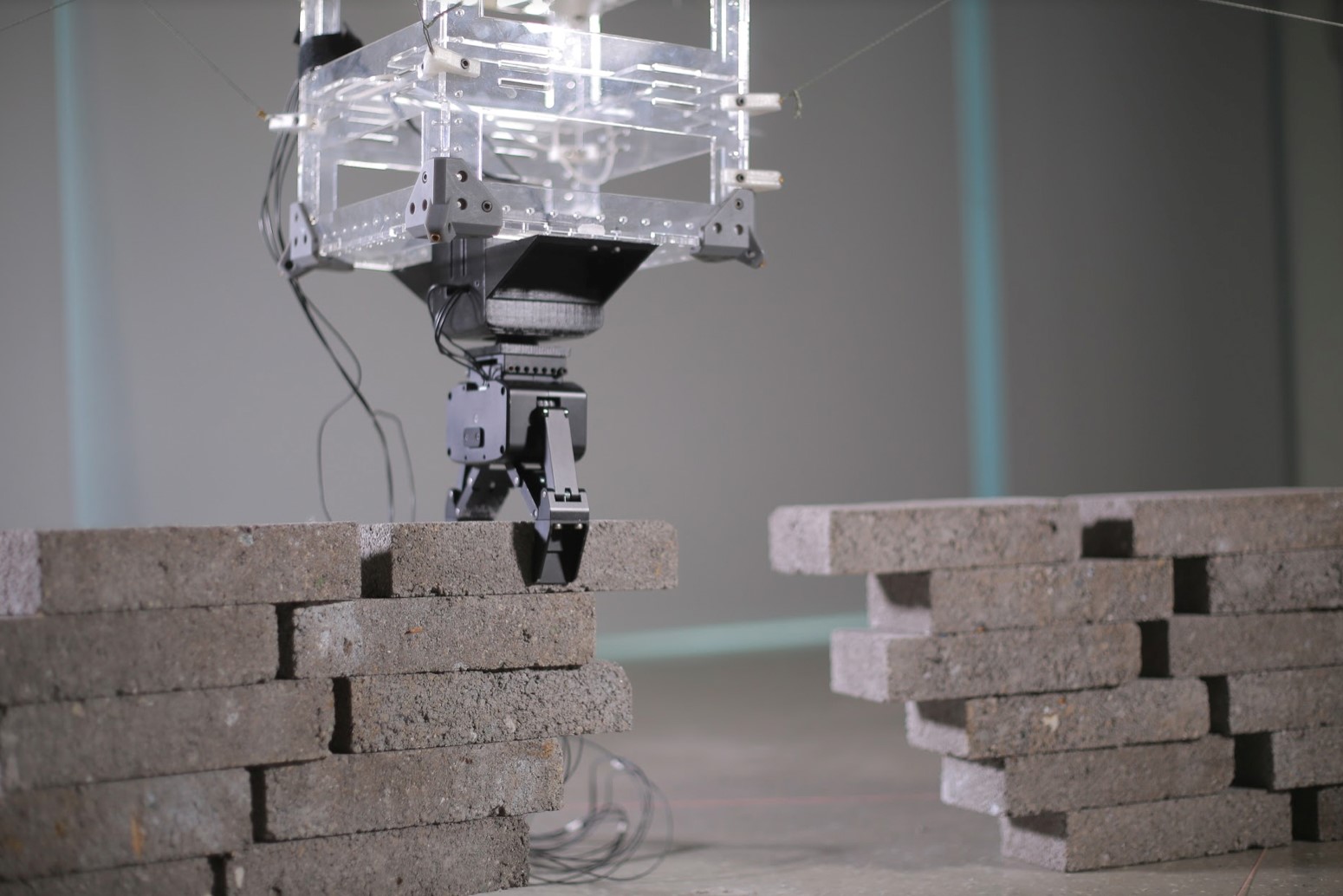
Architects always have an abundance of design ideas, yet in the real world, there are limitations such as workers’ techniques, time and building costs. A professor from CUHK shows how cable-driven robots transform non-standard and artistic designs into precise executions and eventually help realise the endless possibilities for design concepts.

T-rays radiation does but, far from annoying, it’s a new, safe and easy boon to diagnosing skin disease. With your arm on the imaging window of T-ray equipment, T-rays get under the skin to measure thickness and hydration. A novel method of analysis from CUHK and Warwick University, T-rays improve treatment of eczema, psoriasis and skin cancer.

We all know what LEGO is—it is a timeless, fun and educational toy for a kid, one he or she played with as a child, and now probably steps on when walking around the house as a parent. But the charm of LEGO knows no bounds. In fact, more and more adults nowadays show an increased interest in tinkering with these brightly hued bricks.
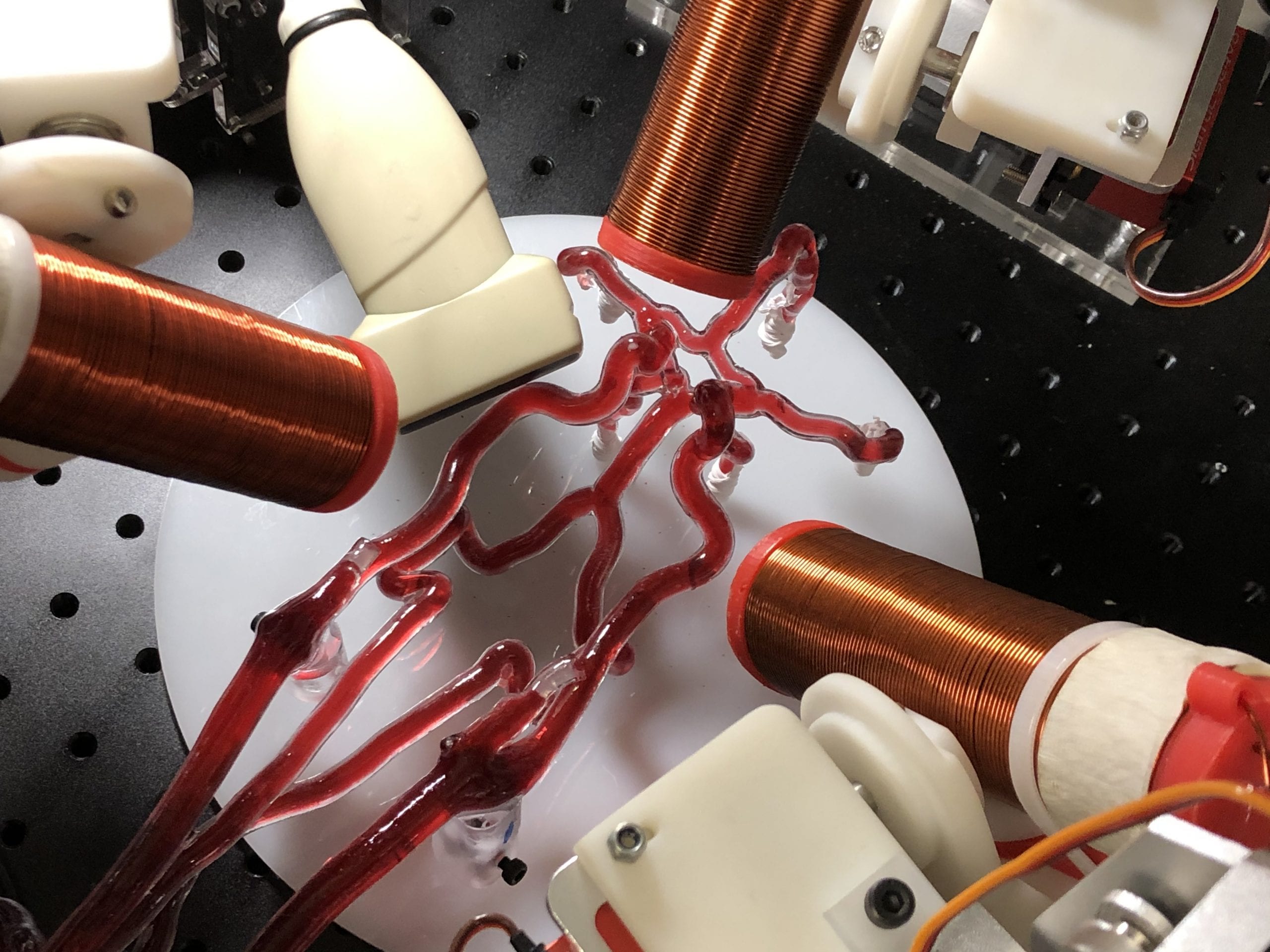
There is a new way to deploy the right microrobotic swarm into a bodily fluid to fight illness. A research group of the Faculty of Engineering has categorised magnetic swarming microrobots and devised ways to select the one that navigates best in a bio-fluid, taking treatment into the vascular system and other confined regions of the body.

10,000 times faster, 98% cheaper and better quality, a revolution in nanoscale 3D printing technology comes from the Faculty of Engineering Professor Shih Chi Chen and his team with FP-TPL. It prints layer-by-layer not point-by-point, greatly improves resolution, and heralds a new era for biomedical and nanotechnology.

Hackers roaming the web hijacking clicks for fraud and malware downloads may soon be foiled. Professor Wei Meng of Faculty of Engineering’s browser-based analysis framework has found three techniques used for intercepting user’s clicks. The source code of the framework will be released so web browsers can detect interceptions and warn users.

Phantom Dancer, CUHK student robotics team, won the ABU Robocon championship in Mongolia with some smart moves. After a year of hard work, two robots were engineered to take tricky steps over terrain and on ropes to win this international trophy - a first for CUHK and Hong Kong.